
Metagenomics Sequencing
Rp. 6.800.000 ($ 380) per sample
40 days

Sample Requirement: Total Extract DNA ≥40 ng/µL in 20 µL volume, A260/280 = 1.8–2.0, A260/230 >2.0, fragment size >10 kb
Method & platform: Direct Sequencing ONT
Metagenomics Sequencing
Assembled Genome
FASTA format containing high-quality contigs, scaffolds, or chromosome-level assemblies.Assembly Metrics Report
Comprehensive quality assessment including N50/L50, total genome size, GC content, and genome completeness (BUSCO).Annotation Files
GFF3/GTF: gene coordinates and structural features
CDS sequences (FNA): nucleotide coding regions
Protein sequences (FAA): translated gene products
Functional Annotation
Functional characterisation of predicted genes, including Gene Ontology (GO), KEGG pathways, Pfam domains, InterPro annotations, and more.Standard Variant Discovery
Identification of genomic variations, including Average Nucleotide Identity (ANI), aligned portion, single nucleotide polymorphisms (SNPs), insertions and deletions (indels), and structural variants (SVs).Phylogenetic Analysis
Evolutionary relationship analysis based on conserved genes or whole-genome data. Outputs are provided in Newick (.nwk) format and as publication-ready images (.png).
Default Deliverables
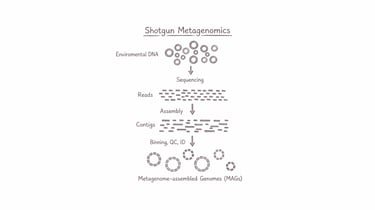
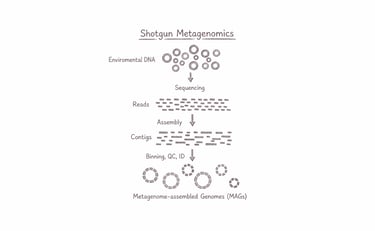
Metagenomic sequencing profiles the complete genetic content of microbial communities by sequencing all DNA present in an environmental or clinical sample, without the need for cultivation. This approach enables comprehensive taxonomic identification, functional gene characterization, genome reconstruction through metagenome-assembled genomes (MAGs), and the discovery of novel microorganisms. It is particularly powerful for microbiome research, environmental monitoring, pathogen surveillance, and uncovering the ecological and functional diversity of complex microbial ecosystems.
Amplicon Sequencing
Amplicon Sequencing
Rp. 2.000.000 ($ 115) per sample
40 days
Sample Requirement: Amplicon ≥25 ng/µL in 20 µL volume, A260/280 = 1.8–2.0, A260/230 >2.0
Method & platform: Amplicon Sequencing ONT
Quality-Controlled Sequence Files
FASTA/FASTQ files containing filtered, trimmed, and quality-controlled amplicon sequencing reads generated from raw sequencing data.
OTU/ASV Feature Table
Abundance tables representing microbial composition across all samples.
Taxonomic Classification
Taxonomic assignment of microbial communities based on reference databases, including relative abundance estimation across multiple taxonomic levels.
Diversity Analysis
Comprehensive microbial community analysis based on amplicon sequencing data, including taxonomic composition, relative abundance estimation, diversity assessment, and phylogenetic analysis.
Functional Prediction Analysis
Predictive functional profiling of microbial communities inferred from marker gene data.
Default Deliverables
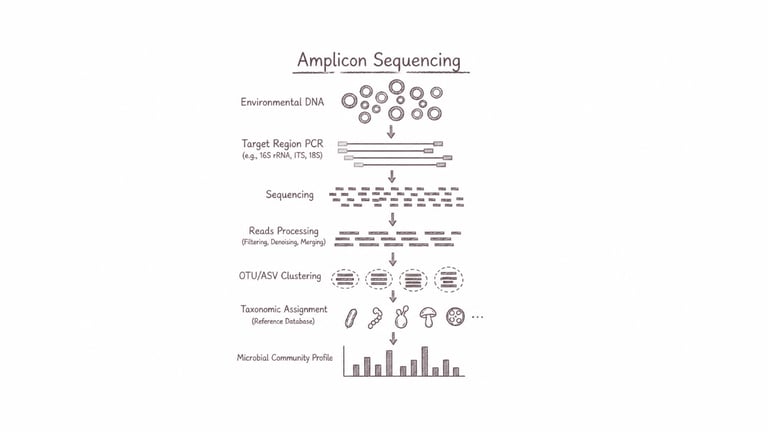
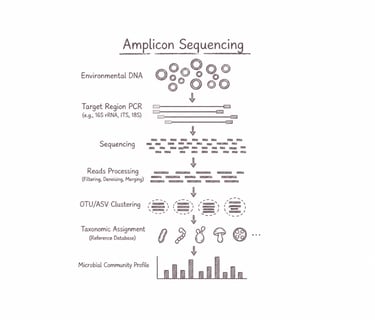
Amplicon sequencing characterizes microbial community composition by targeting and sequencing specific genetic marker regions, such as 16S rRNA, ITS, or 18S rRNA genes. This targeted approach provides a cost-effective and high-throughput means of identifying and comparing microbial taxa across diverse samples, making it ideal for biodiversity assessment, microbiome profiling, ecological studies, and monitoring changes in microbial community structure across environments or experimental conditions.
Got any questions?